War Thunder Mobile
- 4.7
- Rating
- 10.00M
- Installs
- Free
- Price
 Analysis by App-foxy
I approached War Thunder Mobile expecting a portable action game built around military vehicles, but what stood out first was its unusual scale. Instead of asking me to choose only tanks, only ships, or only aircraft, it puts those three kinds of machines into the same broad combat experience. That makes each session feel more varied than a typical mobile vehicle game, although it also means the game asks more from both the player and the phone.
Developed by GAIJIN NETWORK LTD, this free-to-play action game is aimed at players who want recognizable military hardware and direct combat rather than a lightweight arcade distraction. The central appeal is easy to understand: I can move from armored ground fighting to naval engagements and aerial action without installing separate games. The more important question is whether that ambition works comfortably on a mobile screen. In my experience, the answer depends heavily on what I want from a session, how much attention I can give it, and how capable my device is.
How the pace feels from the first battle
The speed of a match is not simply about how quickly vehicles move. It is also about how quickly I can read the battlefield, aim, react to threats, and recover from a poor decision. War Thunder Mobile often feels fast because several things happen at once: vehicles cross open ground, aircraft can change the danger above me, and ships create a different kind of spacing and timing. Even when my own machine is moving slowly, the situation around it can change quickly.
You May Also Like

 Blood Strike: 2.5 Anniversary
Blood Strike’s Loadouts Turn Every Drop Into a Tactical Gamble
A close look at Blood Strike’s custom loadouts: how fast access to signature weapons reshapes its battle royale rhythm, rewards preparation, and narrows the gap between fights.

 Pandora - Music & Podcasts
Pandora’s Music Is Easy to Start, but Harder to Recover
Pandora’s strength is its low-effort path from a seed to a station. Its weak spot is how much confidence it asks you to place in connection, setup, and quiet recovery.

 8 Ball Pool
 Is Built on Rivalries, Rematches, and Routine
A close look at the rivalries, rematches, shared routines, and unanswered safety questions that turn a quick pool match into a persistent mobile community.

 Samsung Music
’s Quiet Strength Is Playing What You Already Own
Its reach comes less from spectacle than from dependable access to a personal library. That simplicity is both the app’s strongest retention engine and its ceiling.

 AccuWeather: Weather Radar
AccuWeather Review: A Quick, Clear Forecast for Everyday Decisions
For everyday plans, the best forecast is the one you can understand quickly. AccuWeather makes rain timing, radar, and local conditions easy to act on, with a few trade-offs.

 Hill Climb Racing
Why Hill Climb Racing Still Turns Crashes Into One More Run
A tiny car, a bumpy hill and one more upgrade: Hill Climb Racing keeps resurfacing because its simple chaos makes every near-miss feel personal.
More From Our News Desk



That makes the opening moments important. I cannot treat every battle like a casual drive toward the nearest objective. A tank may need a safer angle before exposing itself, while a ship needs more time to adjust its position and direction. Aircraft create a different rhythm again, with less room for hesitation once a target enters view. The game therefore rewards players who make a quick plan instead of relying only on reflexes.
Touch controls are naturally more demanding than a physical controller or mouse and keyboard. I had to keep one finger focused on movement while using another for aiming and combat actions, and that can feel busy when several threats appear together. The interface becomes easier after repeated play, but the first sessions may feel less precise than expected. If I am used to console or PC vehicle games, I should expect an adjustment period rather than instant control.
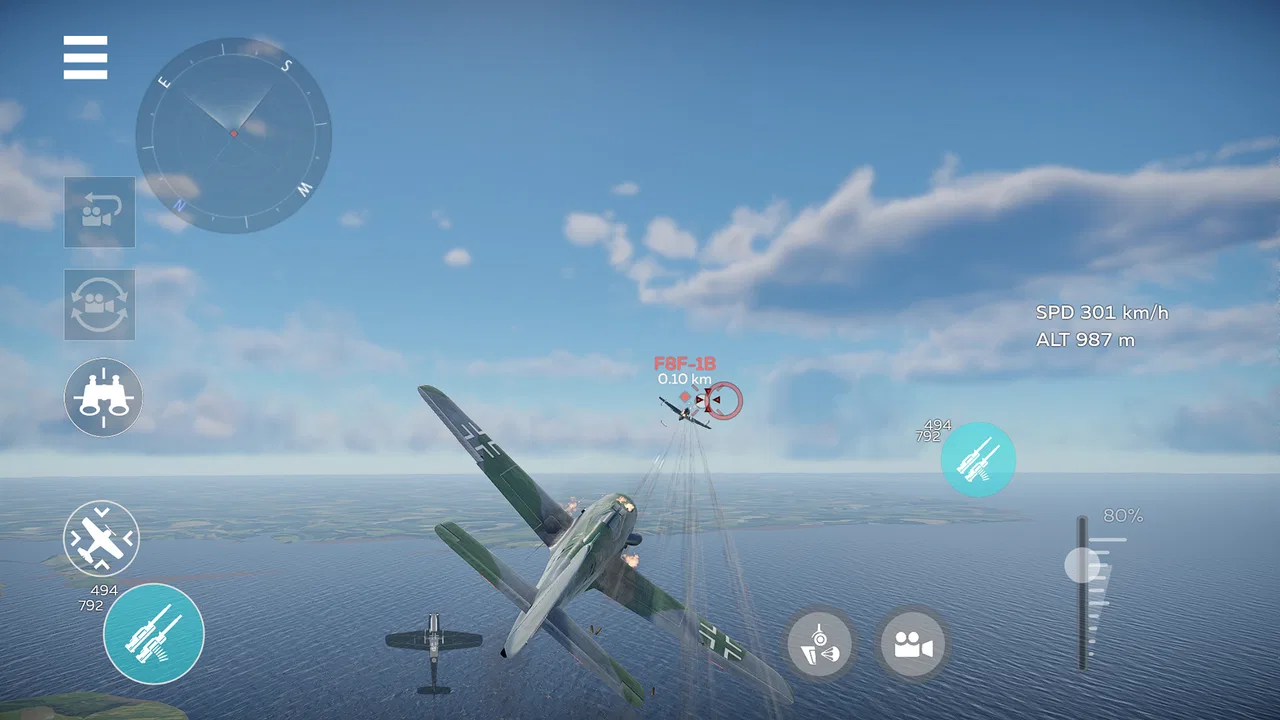
The speed also changes according to the vehicle type. Ground combat gives me more opportunities to use cover, pause, and study an approach. Naval action tends to create longer lines of sight and more commitment once a ship begins turning. Aircraft can make a battle feel more urgent because altitude, direction, and target selection matter in a shorter window. I like that contrast, but it means the game does not have one universal pace that suits every player.
A useful habit is to avoid spending the first minute chasing every visible opponent. In a tank, I get more value from checking likely firing lanes and keeping an escape route than from rushing forward without information. With ships, anticipating a turn before I need it is more useful than trying to correct direction at the last second. In the air, I benefit from choosing a target I can actually follow rather than wasting time on a distant opportunity.
The real speed test is decision-making, not vehicle acceleration. Players who enjoy reading pressure and choosing when to attack will probably find the tempo satisfying. Someone looking for a simple game where every action produces an immediate result may find the controls and battlefield awareness tiring.
What happens when the screen gets busy
The most demanding moments come when visual information, touch input, and combat decisions collide. A crowded ground engagement can require me to steer, adjust the camera, identify a threat, and decide whether to fire or retreat almost simultaneously. Naval battles can feel heavy in a different way because movement is less immediate, while aircraft demand fast camera and direction changes.
These moments expose the difference between a calm session and a heavy-use session. A short battle with little contact may feel comfortable, but repeated matches with constant movement and effects are a tougher test for both concentration and the device. I noticed that my own performance declined before the game necessarily felt overwhelming. After several intense rounds, small control mistakes became more common, especially when I tried to rush actions.
For that reason, I would not judge the game only by its first few minutes. A better test is to play several different vehicle types in succession. That reveals whether I enjoy the full range or whether one mode suits me much better than the others. It also shows whether my phone remains comfortable during longer use, rather than only during a brief launch and menu check.
Resource demands matter most when the action becomes visually dense. I am careful not to treat a single smooth session as proof that every device will behave the same way. The game is designed around large combat scenes and multiple vehicle classes, so players should expect it to be more demanding than a minimalist action title. A newer or stronger phone is likely to provide a more comfortable experience than an entry-level device, particularly during extended play.
Another practical issue is attention. This is not the best choice for playing while distracted, walking around, or trying to fill only a few seconds between tasks. Even a short battle can require enough concentration that I prefer sitting down and giving it a proper window. When I do that, the game feels more rewarding because I am making deliberate choices instead of reacting late to everything on screen.
My most useful heavy-session routine is simple: I lower visual expectations before blaming the controls, close unnecessary background activity, and take a break after several demanding matches. Those steps do not change the game itself, but they make it easier to distinguish a gameplay mistake from a device or fatigue problem. They also reduce the temptation to continue playing when my attention has already dropped.
Reliability in everyday play
Reliability is more than whether a game opens. For me, it includes whether a battle feels consistent, whether controls remain understandable under pressure, and whether I can return to the game without having to relearn everything. War Thunder Mobile makes a strong first impression when the vehicle variety works as intended, but its broad design also creates more possible points of friction than a narrowly focused mobile action game.
The current version is 1.22.3.23, and that matters because mobile games can change over time through updates. I would keep the game reasonably current rather than judging an old installation against a newer experience. If a player notices unusual behavior after an update, restarting the app and checking the basic device conditions is a sensible first step before assuming the problem is permanent.
I also recommend treating account progress and purchases thoughtfully. The game is free to download, but in-app items range from $0.99 to $99.99 each. That wide range makes it especially important to decide in advance whether I am comfortable spending and what kind of spending fits my habits. The strongest way to enjoy the game is to understand that free access does not automatically mean a completely cost-free long-term experience.
For a new player, reliability improves when the first sessions are used for learning rather than chasing immediate results. I focus on one vehicle style at a time, learn how movement feels, and pay attention to why I was defeated. Switching constantly between tanks, ships, and aircraft is exciting, but it can hide the basic lessons each mode requires. A little structure helps the game feel less chaotic.
There is also a social expectation built into a shared battle game: other players are affected by my choices. I try not to leave a match mentally just because the opening went badly. A poor start can still become useful if I change position, protect a better angle, or support a teammate instead of repeating the same failed approach. That mindset makes the experience more reliable emotionally, even when the result is not favorable.
One recovery tip is to separate a bad battle from a bad session. If I make a mistake because I misunderstood a vehicle or route, I can learn from it. If I keep making unrelated mistakes after several intense rounds, the better solution may be a break rather than another match. This sounds obvious, but the game’s fast feedback can encourage me to queue again immediately, even when I am no longer playing carefully.
Device limits and practical expectations
The minimum operating-system requirement is Android 10, so anyone using an older Android release should check compatibility before planning around the game. That requirement is only one part of the picture. A phone can meet the software requirement and still provide an uncomfortable experience if its hardware, storage situation, battery condition, or thermal behavior is weak.
I would approach installation with realistic expectations. A game combining ground vehicles, ships, and aircraft is unlikely to feel as light as a simple two-dimensional action title. I would make sure the phone has a comfortable amount of free space and avoid beginning a long session when the device is already warm. I would also test the game on the same network and in the same place where I normally intend to play, because a quick menu check tells me very little about a demanding battle.
Battery usage is another everyday consideration. Extended action sessions naturally keep the screen active and require sustained input, so I would not choose this as my default game when I need to preserve battery for travel or communication. Playing while connected to power can be convenient, but heat becomes more important in that situation. If the phone starts feeling uncomfortably warm, reducing session length is wiser than forcing a longer run.
Screen size affects the experience too. On a larger phone, the battlefield and controls have more breathing room. On a compact screen, I may find that my fingers cover important information or that camera adjustments feel cramped. A tablet could make the interface easier to see, although portability and comfort still depend on how I hold it. I would not assume that a bigger display automatically solves every control issue, but it can make visual scanning less tiring.
Players who use a budget device should be especially clear about priorities. If stable, relaxed performance matters more than visual ambition, a simpler action game may be a better fit. War Thunder Mobile is appealing precisely because it attempts something broader, and that ambition comes with a higher practical cost in attention and device resources. It is better to choose a focused alternative than to spend every session fighting an uncomfortable frame rate, heat, or cramped controls.
The game is rated Everyone 10+, which makes it accessible to a broad audience, but parents should still consider the nature of competitive combat and the presence of optional purchases. The age label does not tell me whether a particular child will enjoy the complexity or handle spending decisions well. I would introduce it with clear limits and supervision around purchases, especially because the available item prices cover a substantial range.
Who will enjoy the complete vehicle mix
The strongest audience is someone who already likes military vehicles and wants more than one combat perspective on a phone. I enjoy being able to compare the patience required by a tank with the positioning required by a ship and the urgency of an aircraft. That variety gives the game a reason to stay installed after the novelty of the first battle fades.
It also suits players who like improving through repetition. The satisfaction does not come only from winning. It comes from recognizing a dangerous route, timing a turn earlier, choosing a more useful target, or understanding why an attack failed. If I want a game that rewards small improvements in awareness, this is a good candidate.
On the other hand, I would skip it if I want a very short, low-attention experience with almost no learning curve. I would also look elsewhere if my main priority is the deepest possible simulation of one vehicle category. A dedicated tank, naval, or flight game may offer a more concentrated experience, while a simpler arcade title may be easier to pick up during a brief break.
Compared with the usual alternatives in mobile action, this game’s distinctive trade-off is breadth versus simplicity. A single-focus title can teach its controls faster and may feel more immediately polished within that one style. War Thunder Mobile gives me more variety, but I pay for that variety with a steeper adjustment period and more context to process during combat.
My performance verdict after living with the idea
War Thunder Mobile succeeds when I treat it as a serious mobile action game rather than a disposable time filler. Its combination of tanks, ships, and aircraft gives it a clear identity, and the free entry point makes it easy to test whether that identity matches my interests. The 4.7 average from around 475 thousand ratings and more than 10 million installs suggest that the concept has reached a large audience, but those figures do not replace my own device and control test.
I would install it on a phone running Android 10 or newer, then judge it through several complete sessions instead of a single launch. I would test ground, naval, and aerial combat separately, watch how the phone behaves during heavier action, and decide whether the touch controls feel manageable after the initial novelty wears off. That process answers the practical questions that a short store description cannot.
My final recommendation is positive, with conditions. If you want a varied military action game, have a reasonably capable device, and are willing to learn its controls, I think it is worth trying. If you need effortless performance, minimal battery impact, or a purely casual game, I would choose something lighter. Its best feature is also its biggest demand: the ambition to bring three very different battle styles into one mobile experience.
For me, the game is most enjoyable in planned sessions where I can concentrate, experiment, and stop before fatigue turns good decisions into rushed ones. I would keep spending optional and deliberate, use the first matches to learn rather than chase immediate success, and give the phone sensible breaks during heavy play. With those expectations, this is a convincing choice for players who want substantial action on mobile without being limited to a single kind of vehicle.
FAQs for War Thunder Mobile
01What is War Thunder Mobile and what can I expect from the gameplay?
War Thunder Mobile is a combat simulation game that brings the intense battles of land, air, and sea to your fingertips. Expect realistic graphics, historically accurate vehicles, and a variety of missions. The game offers both single-player and multiplayer modes, allowing you to engage in PvP battles with players worldwide.
02Is War Thunder Mobile free to play, and does it include in-app purchases?
War Thunder Mobile is free to download and play. However, it includes in-app purchases that allow players to buy in-game currency, premium vehicles, and various upgrades. These purchases can enhance your gaming experience but are not necessary to progress in the game.
03What devices are compatible with War Thunder Mobile?
War Thunder Mobile is available for both Android and iOS devices. Ensure your device meets the minimum system requirements for optimal performance. This typically includes having the latest OS version and sufficient RAM and storage space to handle the game's graphics and processing demands.
04How does War Thunder Mobile ensure fair play in its multiplayer modes?
The game uses a matchmaking system to pair players with similar skill levels, ensuring balanced and fair gameplay. Additionally, regular updates and community monitoring help maintain a fair playing environment by addressing any exploits or cheating activities promptly.
05Can I play War Thunder Mobile offline, or is an internet connection required?
An internet connection is required to play War Thunder Mobile, as it primarily focuses on multiplayer interactions and online updates. While some single-player missions might be available offline, the full experience, including PvP battles and real-time events, requires connectivity.
Pros
- Impressive graphics for mobile devices.
- Wide range of vehicles and maps.
- Realistic combat physics.
- Regular updates with new content.
- Cross-platform play available.
Cons
- Can be battery intensive.
- Requires a stable internet connection.
- Complex controls for beginners.
- In-app purchases can be pricey.
- Occasional server lag issues.

War Thunder Mobile
Gallery